In Qatar the roof takes the worst of the sun all day, and whatever heat it absorbs ends up inside, where the air conditioning has to remove it again at a cost. Thermal insulation and reflective coatings attack that problem at the source. With cooling making up most of a typical building’s energy use, the roof is the single best place to start cutting what a building spends on staying cool.
In this article
Why the roof is the priority surface
A flat roof under the Gulf sun reaches temperatures far above the air around it. That heat conducts down through the structure and loads the cooling system from above for the whole working day. Walls get sun too, but the roof takes the most intense overhead radiation for the longest time, which is why it gives the biggest return for treatment. Fix the roof and you have addressed the largest single heat gain on most low and mid-rise buildings.
The mistake is treating the roof as just a waterproofing surface and ignoring its thermal behaviour. It is doing two jobs, keeping water out and heat out, and a good system treats both rather than solving one and forgetting the other.
How reflective coatings actually work
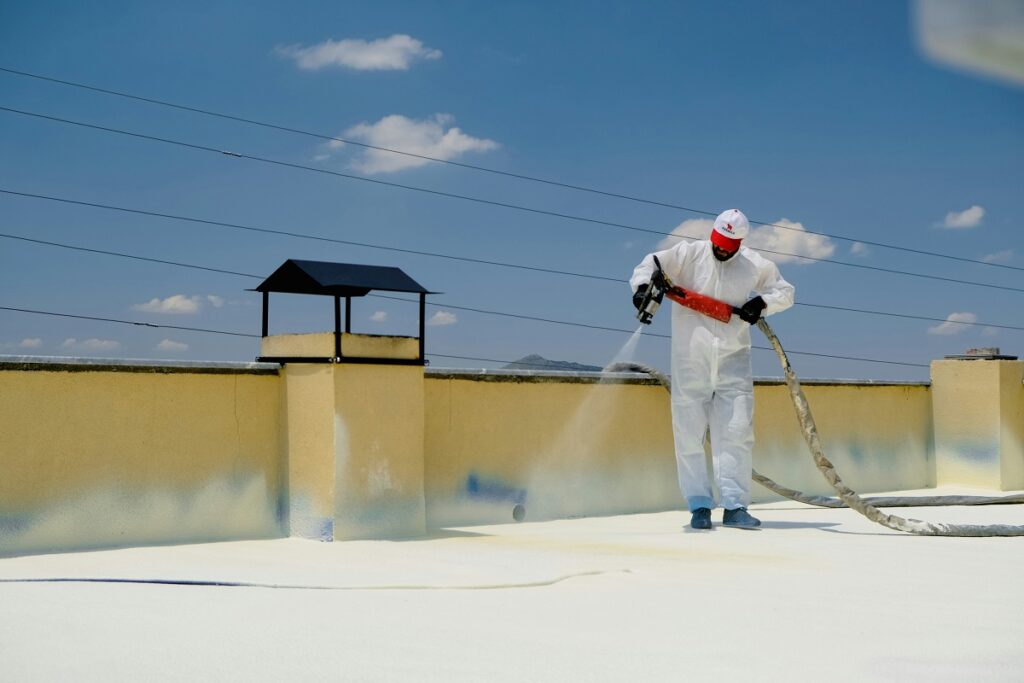
Heat-reflective coatings are formulated to bounce a large share of solar radiation back off the roof instead of letting it soak in. The good ones reflect a high percentage of sunlight, which keeps the roof surface dramatically cooler and cuts the heat reaching the interior. On a Qatar building’s cooling-heavy bill, that reduction is meaningful, not a rounding error.
They are also relatively quick and non-disruptive to apply compared with rebuilding a roof, which makes them an easy first move on an existing building that is expensive to cool. The catch is that a coating is a surface treatment. It reduces heat gain but does not replace proper insulation where the building needs it.
A provider who recommends the same product for a warehouse, an office tower and a villa is not really assessing the building.
Coatings versus insulation: use both
Reflective coatings reduce how much heat hits the building. Thermal insulation slows how fast heat moves through the structure once it is there. They solve related but different parts of the problem, and the strongest results come from using them together rather than arguing about which is better. More complete approaches, such as external insulation systems, can cut cooling losses substantially, which matters in a country where air conditioning dominates consumption.
The right specification depends on the building. A warehouse, an office tower and a villa each have different roofs, budgets and cooling loads, so the thermal insulation spec should be matched to the actual structure rather than pulled off a shelf.
Lower bills, longer-lasting roof
Treating the roof for heat does two things at once: it cuts the cooling bill every summer, and a cooler roof surface ages more slowly, which extends the life of the waterproofing underneath. Compass Waterproofing installs thermal insulation and heat-reflective roof systems across Qatar, specified for the building rather than sold off a shelf, and integrated with the roof waterproofing so the roof handles heat and water as one system.
If your cooling bills climb every summer, the roof is where to look first. It is usually the cheapest surface to treat and the one that pays the difference back fastest.