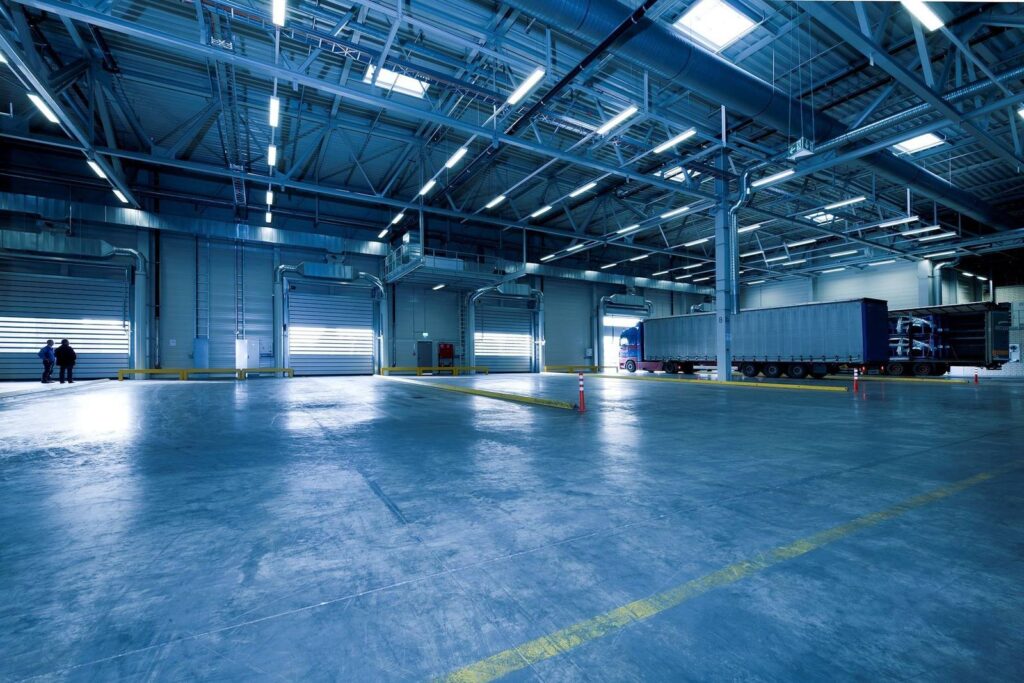
A failed epoxy floor is one of the most visible mistakes in a building. It peels, bubbles or wears through in patches, usually within a year, and it almost always traces back to the same cause: the surface underneath was never prepared properly. The floor is decided before the epoxy ever comes out of the tin.
In this article
Where epoxy flooring makes sense
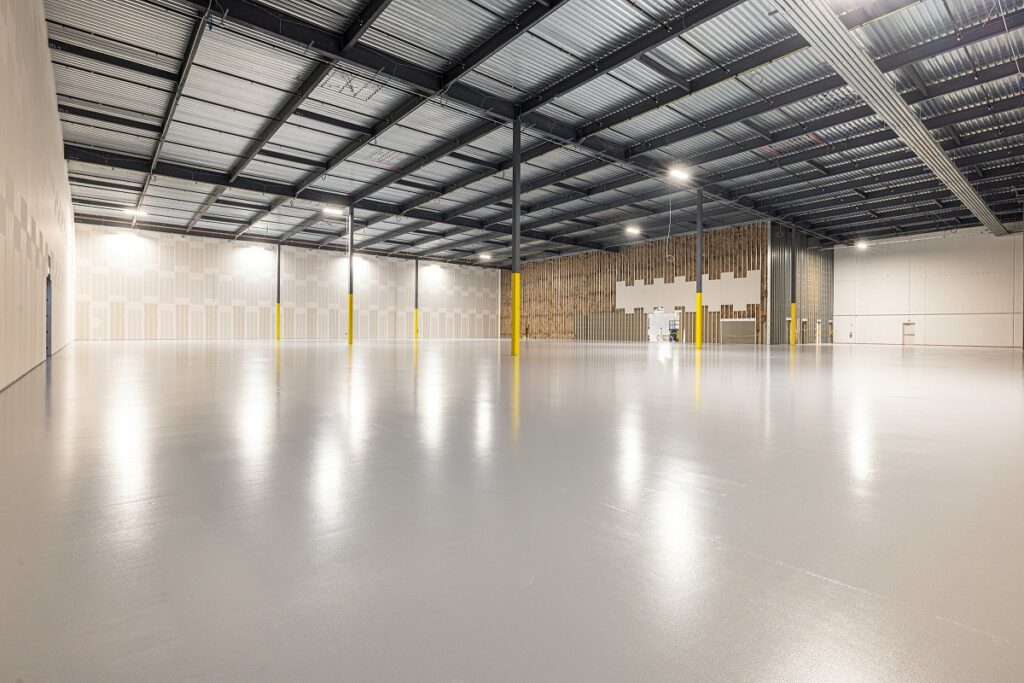
Epoxy is the right answer for floors that take a beating: warehouses, workshops, factories, car parks, kitchens and labs. It gives a hard, seamless surface that resists chemicals, takes heavy traffic and forklift loads, cleans easily, and can be made anti-slip where safety demands it. For an industrial or logistics operation, a good epoxy floor shrugs off the kind of use that would destroy bare concrete or tiles.
It is less suited to places where it is chosen purely for looks without regard to the conditions. Epoxy in the wrong setting, or the wrong type for the loads and chemicals involved, disappoints. The product has to match the job, not just the budget.
Why preparation decides everything
Epoxy is only as good as its bond to the concrete beneath. If that concrete is dusty, oily, too smooth or holding moisture, the epoxy will not grip and it will lift. Proper preparation means mechanically profiling the surface, usually by grinding or shot-blasting, so the epoxy has something to key into, plus repairing cracks and dealing with any contamination. Skip this and you get a floor that looks perfect at handover and fails the moment it is actually used.
Moisture is the quiet killer in this region. Concrete that has not cured enough, or a slab pulling moisture up from below, will push the epoxy off from underneath no matter how good the product is. A competent installer tests for this before coating rather than discovering it after. That single check separates floors that last from floors that bubble.
The difference between a ten-year floor and a one-year floor is almost entirely in the preparation, not the brand on the bucket.
What a lasting installation involves
A proper job runs in order: assess the slab and its moisture, prepare the surface mechanically, repair defects, then apply the system in the correct number of coats with the right curing time between them. Rushing the cure to reopen the space sooner is a common way to ruin an otherwise good floor. The right system also depends on use, an anti-slip finish for a wet area, a chemical-resistant build for a workshop, a hard-wearing spec for a forklift route.
This is precision work, not painting. Our epoxy flooring and coating services are built around the preparation and moisture testing that decide whether a floor lasts, rather than the speed of getting a shine down.
A floor built to last
Industrial epoxy flooring is an excellent surface when it is installed on properly prepared concrete by people who test before they coat. It is a fast, expensive failure when it is not. Compass Waterproofing installs industrial and commercial epoxy floors across Qatar with the surface preparation and moisture checks that decide whether a floor holds up.
If you need a hard-wearing floor that will not peel in a year, the conversation worth having is about the slab and the prep, not just the finish you want to see.